
It’s coming fast. Artificial intelligence will bring about social changes on the order of the Industrial Revolution: “fueling rapid urbanization, a growing middle class, and increased consumer access to goods….severe environmental degradation, hazardous working conditions, and social disparities.” (Note: credit for that quote goes to a split second analysis by Google Gemini’s AI Search Engine.) An Atlantic article this month bemoaned that modern economists are foolishly looking for AI’a future impact in their rear-view mirrors of previous economic transitions and that our government is wholly inept at establishing policy which might make the transition to AI less traumatic.
I wrote an angry letter to Google recently, returning a Google watch to them. The watch was a gift to my husband and didn’t work with his iPhone. I was furious that Google had not more clearly warned of the incompatibility. The immediate response from “Jan, your Customer Service representative” warmed my heart, reiterating and sympathizing with my frustrations. Jan profusely apologized and offered a gift certificate in recognition of my value to Google. Such a perfect response, I mused. It took a few minutes to come to my senses. Jan wasn’t a person, she was a computer trained to respond. “Jan” helps explain why Google laid off 12,000 workers in 2023.
As an 80-year old, my power to impact AI is mostly limited to voting for the young, far-sighted civil servants who might regulate and guide our world through the upcoming revolution and trauma. It is too late for me to boycott AI; it’s ubiquitous and useful. AI has seeped into my life. My pleasure in the impact of AI on my daily life is significant.
Access to the great writings of technologists, scientists and poets is at my fingertips. My queries have ranged from how-to remove tea stains from cups, an image search for an unknown flower to how best to backup my computer. In a report I wrote recently, I needed the source of John Donne’s quote “no man is an island.” Got it immediately. Same thing for movie reviews, and where we might stream “Wicked for Good.” Periodically, I write for my community’s website. Website posts are often accompanied by images. Free, non-copyrighted images are hard to find.

With Gemini, I can simply enter a phrase, such as “Image of elderly woman overwhelmed by computers” and I instantly am given this:

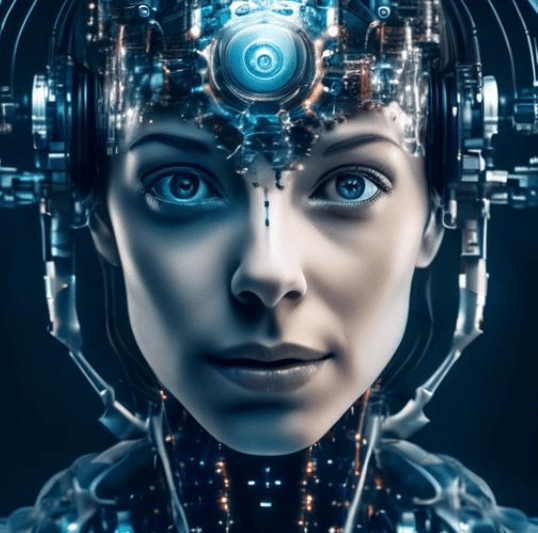
A query asking for a unique non-copyrighted image of elderly residents sharing joy generated this image which I used in a blog post. This blog will include a featured image of AI.
I frequently ask Gemini to edit my writing. Gemini recommends shorter sentences, fewer words and commas and a clearer focus on my objectives. I have found these instructive; my sentences show the results of AI as a training tool.
My most favorite AI tool is the “Coach” which comes with my beta-test version of Fitbit software. My Coach analyzes my sleep and fitness numbers, asks for input into my health issues and gives daily feedback which I find surprisingly motivating and reinforcing. Here’s an example: “Your readiness score is a high 68…a great boost from earlier this week. This suggests that your body is recovering from recent stressors… While your body is primed for activity, remember to balance this with your current energy levels.”
We cannot and should not stop the advent of AI. AI is a tool created by and for humans. What we should do is be aware of the need for experts in economics, public policy, and artificial intelligence to help us transition. They need our support and our votes.
 Uncharted Waters
Leave a comment