Marriages are often an attraction of opposites. In our marriage, one of the many disagreements is where our mortal remains should be placed after death. My husband wants to visit my grave and remember the good times. He believes that his descendants may wish to honor his grave with a visit now and again. I couldn’t care less. For me, death is the end of conscious individual existence. Perhaps we all join up after death in some spiritual way, but caring about my remains won’t be my concern after my death.
To be fair, his stability and rootedness was an attractive complement to my wanderlust and rootlessness. He grew up in the same home to which he had been brought fresh from the hospital. His grandparents and aunt lived very near, and everyone in the little town knew them. The surrounding cemeteries are filled with his ancestors. On the other hand, I was a Navy brat, and attended 11 schools before 7th grade. My grandparents lived across the continent, and I saw them only briefly on semi-annual visits. I have seen my father’s grave only twice, once just after his funeral.
Burial customs for our parents and grandparents featured viewings of the body in fragrant rooms with dim light, funeral services with eulogies and prayers, and the lowering of the casket into gravesites. Today, most bodies are cremated. It is predicted that by 2045, over 80% of deaths will be followed by cremations. Cremains can be stored in cemeteries or mausoleums ensuring the existence of a place to visit. They can be converted to jewelry. They can be kept in a closet. They might be buried in the backyard. Or they can be situated on the mantel to stay in the midst of family. The newest options are green burials, in which unpreserved bodies are wrapped in linen shrouds and deposited in shallow graves to fertilize the plants and animals nearby. Each of these burial traditions comes with cost variations, environmental impact and individual preference.
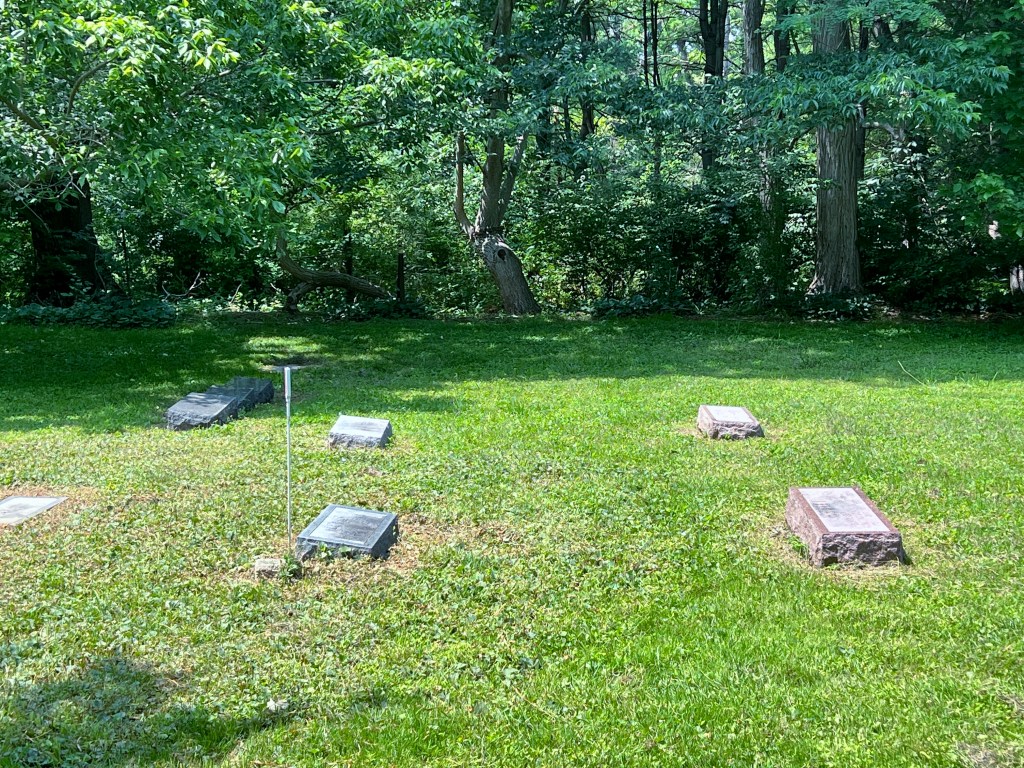
Several years ago, we began bantering about our eternal resting places. My husband made it clear that he wanted a permanent home, where family could sit and mourn him in comfort. I reminded him that we have seldom visited any of our family’s graves and that the cost and environmental impact of funerals were not consistent with our values of frugality and sustainability. When pushed, I suggested that he could have me cremated and tossed wherever he preferred to sit and remember. The end result was that he requested my input and support as he selected a gravesite for our cremains, so that he (or I) would be ready when the first of us dies. It’s a sweet thought, and will give him comfort, so today we visited the Quaker meeting house adjacent to our community and selected a burial spot for our cremains. The meeting house was built in 1710. It served as a non-partisan hospital during the Revolutionary War. The bodies of the Revolutionaries killed at the Battle of Brandywine and their Hessian mercenary opponents are both buried there. It’s possible that a British cannonball is embedded in the stone wall surrounding the meeting house. If the spirits of those buried there roam the cemetery, my husband will treasure their stories. Some of the trees shading the cemetery are hundreds of years old. We readily located the markers of friends from our community. Except for the road noise from the adjacent highway, it’s a quiet shady historical spot. If you come to visit, look for plot 97CW. We will be there. For all eternity…


 Uncharted Waters
Leave a comment